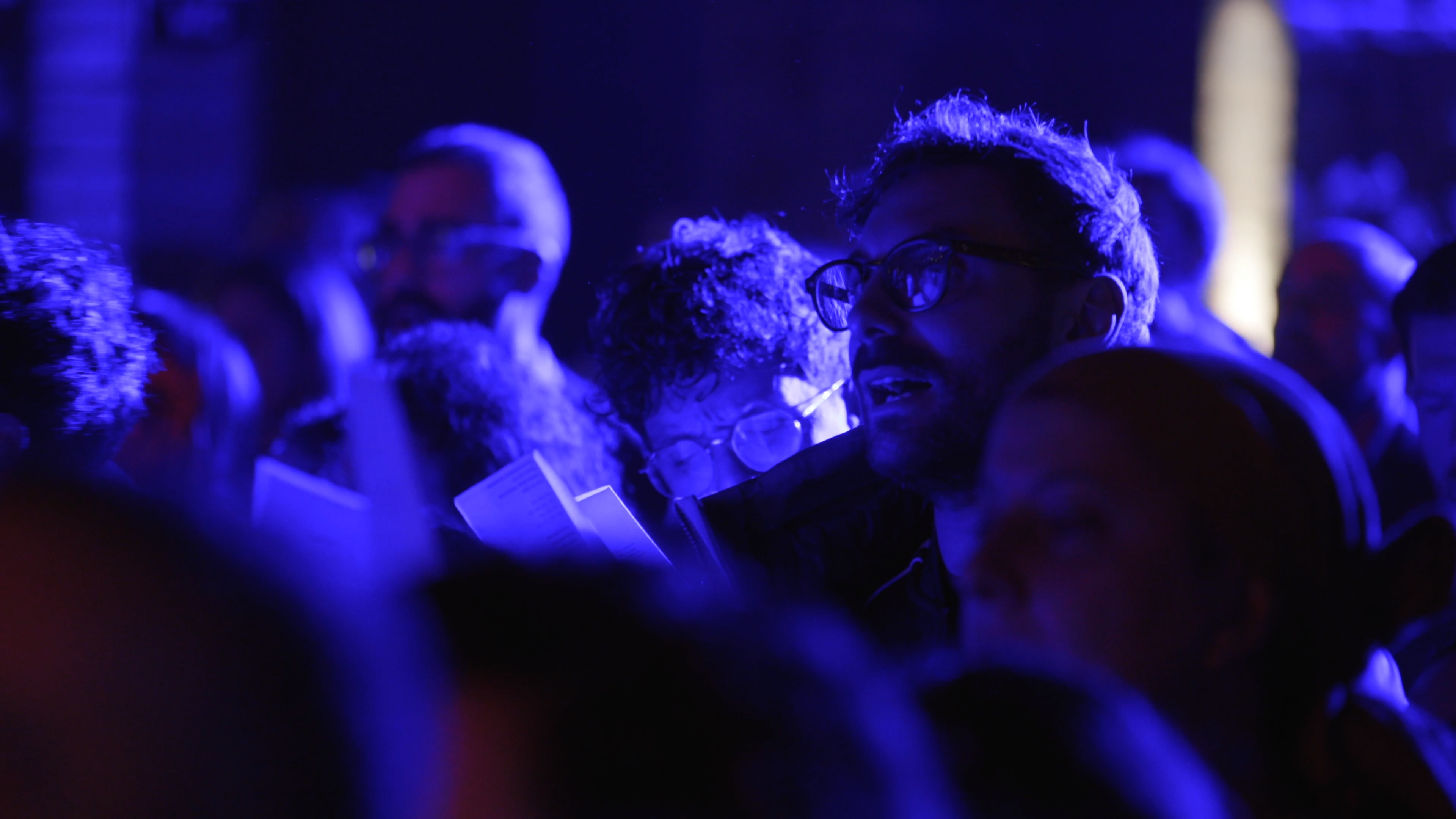
HardKoro was born from a simple idea: collective singing should not be a privilege reserved for those who studied music. It's for everyone — for the person who sings out of tune in the shower, for someone who's never read a score, for anyone who wants to share something real with strangers.
Every session is a social experiment. A room, a guide, a song to learn together. No rehearsals, no audience, no judgement. Just the voice — yours, everyone else's, and the moment they become one.
We don't just say this because participants feel it — research confirms it too. Singing together isn't just enjoyable: it's deeply useful.
When you sing in a group, heart rates tend to align. This isn't metaphor — it's physiology. Shared rhythm creates biological coherence between people.
Vickhoff et al., 2013 — Frontiers in PsychologySinging activates the endorphin system — the same neurotransmitters triggered by physical exercise. The group amplifies the effect: singing together releases more endorphins than singing alone.
Dunbar et al., 2012 — Evolution and Human BehaviorJust 60 minutes of collective singing with strangers generates a sense of connection and belonging comparable to months of acquaintance. It's one of the fastest ways we know to create social bonds.
Pearce et al., 2015 — Royal Society Open ScienceSinging reduces cortisol levels — the primary biological marker of stress. The effect is measurable after a single session, regardless of the participant's musical background.
Keeler et al., 2015 — Frontiers in PsychologySinging imposes a slower, deeper breathing rhythm. In a group, everyone breathes together — which has a direct effect on the autonomic nervous system, producing a state of active calm.
Vickhoff et al., 2013 — Frontiers in PsychologyThe brain processes music differently from language, engaging areas linked to emotional and procedural memory. Learning a song together is an experience that stays with you.
Thaut, 2005 — Rhythm, Music and the BrainNo experience required. Just show up.
See upcoming dates →